@trpc/client
The tRPC client library
About
The tRPC client library
What detecting @trpc/client tells you about a site
@trpc/client reveals an end-to-end type-safe API without a schema language — the front end calls backend procedures as if they were local functions, with TypeScript types flowing across the wire. Its presence is a strong marker of a full-stack TypeScript monorepo built for tight type safety between client and server.
Why the exact @trpc/client version matters
tRPC v10 rewrote the client/server API and v11 refined it; the exact version tells you which procedure-builder and client API the code targets.
@trpc/client in a real-world stack
When you find @trpc/client in a bundle, it rarely travels alone. @trpc/server, zod for input validation, and @tanstack/react-query (which tRPC's React client wraps).
Quick facts
npm install @trpc/clientCommon pairings
Packages this one expects to find in the same project. Each is also a Sourcemap Explorer detection target.
How Sourcemap Explorer detects @trpc/client
@trpc/client ships as v11.18.0, published 2026-06-17 and carries 0 direct dependencies, 2 peer dependencies (typescript, @trpc/server), 1,352 versions on the registry. Those exact numbers are the footprint Sourcemap Explorer matches when @trpc/client rides inside a deployed bundle — here is how the detection works.
We catch @trpc/client from two complementary signals: bundled source paths and the embedded package.json. Modern bundlers (webpack, Vite, esbuild, Rollup, Turbopack) preserve the original node_modules/@trpc/client/ paths inside the JavaScript sourcemap's sources[] array — that's the canonical signal. When the matching package.json is also captured in sourcesContent[], we read the exact version field — patch number included. No regex guessing, no version inference.
- 1
Confirm the site exposes sourcemaps
In DevTools Network, check the response headers of any application script for `SourceMap` or `X-SourceMap`. Failing that, fetch the script's last 4 KB and look for a `//# sourceMappingURL=` comment — that map is where the `@trpc/client` paths live.
- 2
Find the package in the bundle
Open DevTools → Network → reload. Click any application script and look at its sourcemap. Inside, search `sources[]` for entries matching `node_modules/@trpc/client/` — every match confirms the package is bundled. The matching `sourcesContent[i]` for `node_modules/@trpc/client/package.json` gives you the exact installed version.
- 3
Read the version directly from package.json
Run `jq -r '. as $m | $m.sources | to_entries[] | select(.value | endswith("node_modules/@trpc/client/package.json")) | $m.sourcesContent[.key] | fromjson | .version' bundle.js.map`. Sourcemap Explorer automates the same query in the popup.
Major releases of @trpc/client
When each major version first landed. Major bumps are where breaking changes live, so this timeline is the fastest way to date the @trpc/client version a site actually ships against the ecosystem.
Recent versions
@trpc/client README
Live mirror of the GitHub README, for reference. Updated whenever the repo's default branch changes.

tRPC
End-to-end typesafe APIs made easy
@trpc/client
Communicate with a tRPC server on the client side.
Documentation
Full documentation for @trpc/client can be found here
Installation
# npm
npm install @trpc/client

# Yarn
yarn add @trpc/client

# pnpm
pnpm add @trpc/client

# Bun
bun add @trpc/client
AI Agents
If you use an AI coding agent, install tRPC skills for better code generation:
npx @tanstack/intent@latest install
Basic Example
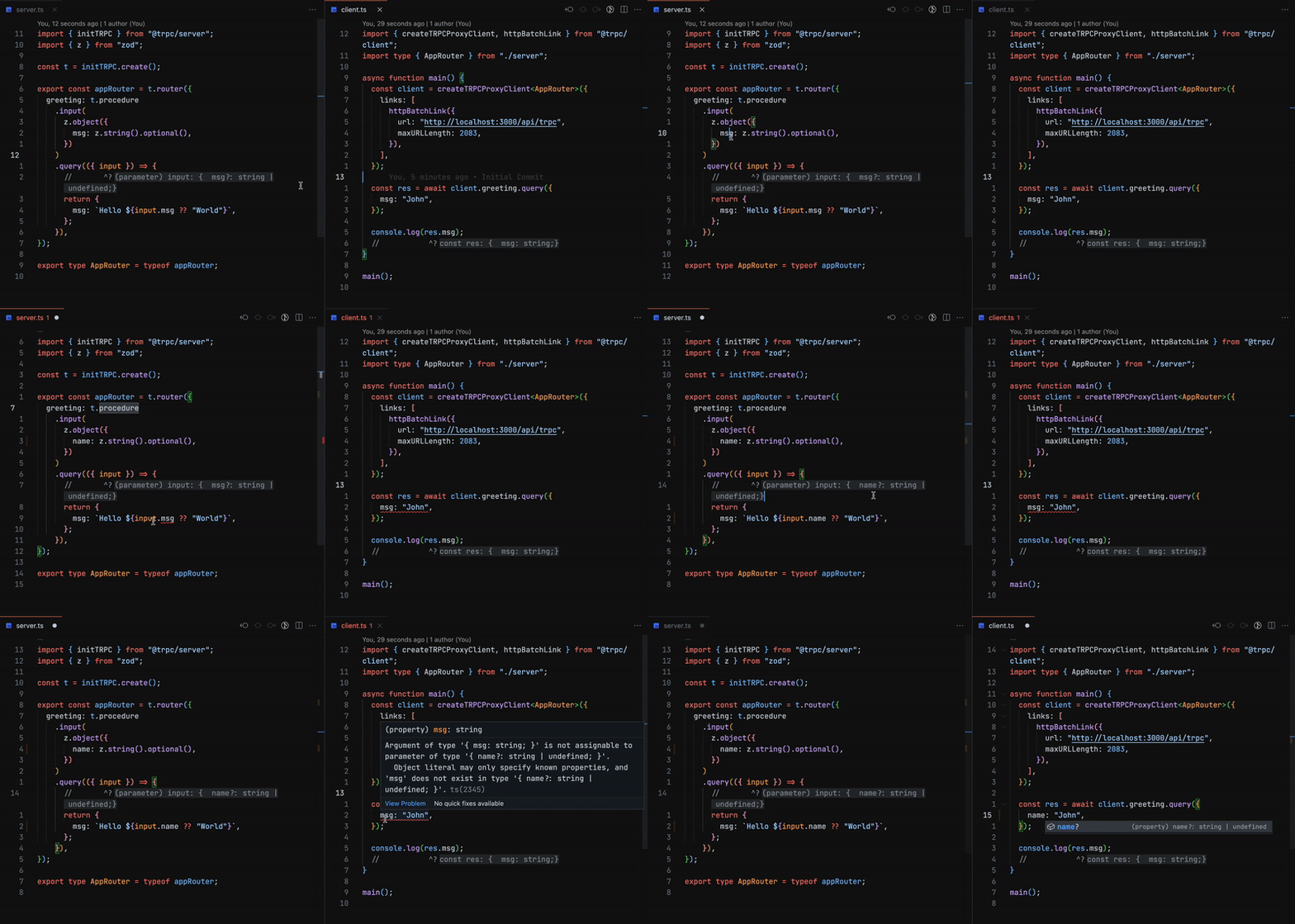
import { createTRPCClient, httpBatchLink } from '@trpc/client';
// Importing the router type from the server file
import type { AppRouter } from './server';

// Initializing the tRPC client
const trpc = createTRPCClient<AppRouter>({
  links: [
    httpBatchLink({
      url: 'http://localhost:3000/trpc',
    }),
  ],
});

async function main() {
  // Querying the greeting
  const helloResponse = await trpc.greeting.query({
    name: 'world',
  });

  console.log('helloResponse', helloResponse); // Hello world
}

main();
FAQ
What is @trpc/client used for?
The tRPC client library
How can I tell if a website is using @trpc/client?
Open the page in Chrome with the Sourcemap Explorer extension installed and read the Stack tab. We catch `@trpc/client` from two complementary signals: `node_modules/@trpc/client/` paths inside the JavaScript sourcemap, and the embedded `package.json` we read for exact-version detection. Without the extension you can do the same lookup manually in DevTools — the steps are listed in the "How Sourcemap Explorer detects" section above.
How do I find out which version of @trpc/client a website is running?
Read it straight from the site's JavaScript sourcemap. When a build ships source maps, the bundled `@trpc/client/package.json` carries the exact `version` string — Sourcemap Explorer extracts it in one click on the Stack tab, and you can do it by hand in DevTools by opening the `.map` file and searching for `node_modules/@trpc/client/package.json`. That is far more reliable than inferring the version from an asset-hash or a `?ver=` query string, which is all surface-level detectors have to go on. The current npm release is 11.18.0, but real deployments frequently run an older pinned version — which is exactly why reading the bundled number matters.
What is the latest version of @trpc/client?
11.18.0, as published on the npm registry. The "Recent versions" table on this page lists the most recent 8 releases with their release dates. Sourcemap Explorer reports the version actually bundled into a site, which can lag the latest release by months on real-world deployments.
Is @trpc/client actively maintained?
Very actively maintained — the last release shipped within the past three months. The last published release was 2026-06-17. Source code: https://github.com/trpc/trpc.
Where can I read more?
Project homepage: https://trpc.io. Source code: https://github.com/trpc/trpc. Published on npm: https://www.npmjs.com/package/@trpc/client. Licensed as MIT.
Detected by Sourcemap Explorer
When a bundle ships sourcemaps, we read the embedded package.json for @trpc/client and report the precise version (the registry's latest is v11.18.0, published 2026-06-17; the bundled copy is often older). Without sourcemaps, an import / require in the page's scripts is enough to flag it.